
WHY RENTAL PROPERTY INVESTING IS LIKE PLANTING A TREE
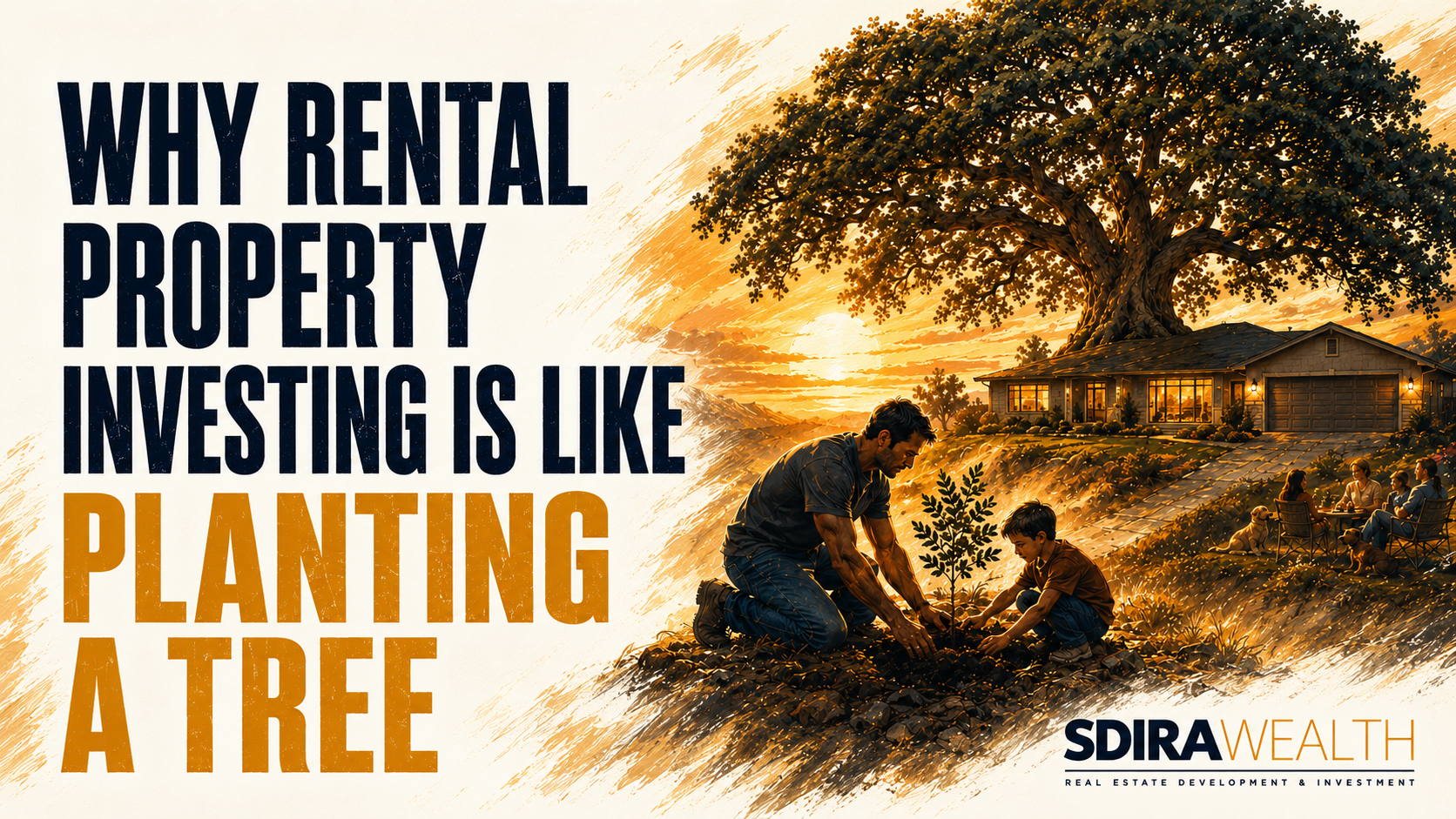
A tree doesn't grow overnight. Neither does wealth. Plant both early.
The best time to judge a tree is not the day it is planted. The same is true of a rental property. Both need strong fundamentals, consistent care, and enough time to reveal what they can become.
Most people understand the patience required to grow a tree. You plant it in the right place, give it strong roots, protect it through changing seasons, and allow time to do what time does best. You do not dig it up every few months to see whether it is growing. You care for it, stay consistent, and trust the process.
At SDIRA Wealth, after 25 years and more than 11,000 properties delivered, we have seen that meaningful real estate results rarely happen overnight.
Rental property investing works much the same way. The first day you own a property is rarely the day its full value becomes clear. The opportunity may develop over years through rental income, principal paydown, rent growth, appreciation, and potential tax advantages. The longer a quality asset is owned and managed well, the more time those forces have to work together.
The strongest growth is rarely obvious at the beginning
A newly planted tree can look unimpressive. It may be small, vulnerable, and years away from providing meaningful shade. Yet beneath the surface, its roots are beginning to spread. Some of the most important work is happening before most people can see it.
A rental property can follow a similar pattern. Early cash flow may be modest, the mortgage balance may still be substantial, and expenses may arise. Yet each month of responsible ownership may help reduce debt, support rent growth, build equity, and improve the owner's long-term position. None of those outcomes is guaranteed, but a well-selected and well-managed property has more opportunity to mature over time.
Five wealth-building forces that can work together
A rental property may contribute to long-term wealth through five potential forces:
1. Cash flow: Rental income remaining after the mortgage, management, maintenance, property taxes, insurance, vacancies, and other operating costs.
2. Appreciation: The possibility that the property's value increases over time as the market and surrounding community grow.
3. Principal paydown: The portion of each mortgage payment that reduces the loan balance and builds owner equity.
4. Rent growth: The potential for rental income to rise over time while the principal-and-interest portion of a fixed-rate mortgage generally remains unchanged. Property taxes, insurance, maintenance, and other expenses may still increase.
5. Potential tax advantages: Depreciation, eligible deductions, cost segregation, and other strategies may improve after-tax results when used appropriately. Eligibility and benefits vary, so investors should consult qualified tax professionals.
These are the five wealth-building forces within an investment. The Freedom Five Formula is a separate portfolio-building framework: start with one property and build toward five over time. One force alone may not transform an investor's future, but together they can create meaningful progress.
Planting early gives time a chance to work
Investors often delay while waiting for the perfect interest rate, market, or property. Preparation is essential, but perfection is not available.
A better question is: "Am I financially prepared to buy a quality property, maintain appropriate reserves, and hold it through different market cycles?"
Time can be one of a real estate investor’s greatest advantages. Starting earlier gives a well-selected property more time for rental income, principal paydown, rent growth, and potential appreciation to work together and strengthen the owner’s financial position.
The soil matters: market, property, and team
Planting early does not mean planting carelessly. A tree placed in poor soil without enough sunlight or water may never thrive. A rental property purchased without disciplined research can create the same problem.
Before investing, evaluate the fundamentals:
• Population and job growth
• Housing affordability and local demand
• Vacancy rates and realistic rental comparables
• Property taxes, insurance, and regulatory conditions
• Purchase price compared with replacement cost
• Construction quality and expected maintenance
• The strength of the property-management team
• Cash reserves for vacancies, repairs, and unexpected expenses
At SDIRA Wealth, market selection begins long before a property is offered to an investor. The goal is not simply to build another house. It is to develop new-construction rental properties in markets where the long-term fundamentals can support responsible ownership.
Ownership still requires care
The phrase "passive income" can make rental property sound effortless, but every investment requires stewardship. Even with professional management, owners need reserves, insurance, periodic reviews, and realistic expectations. The objective is to build a system that allows the asset to perform without requiring the owner to handle every daily task personally.
Healthy growth sometimes requires pruning
A healthy tree needs periodic attention. Dead branches are removed, weak areas are addressed, and growth is guided in the right direction. Rental property ownership also requires regular review. Investors should monitor performance, maintain appropriate reserves, address maintenance early, evaluate property management, and adjust their strategy when circumstances change.
Long-term investing does not mean ignoring an asset. It means caring for it without overreacting to every short-term change.
You do not plant a tree for today's shade. You plant it for the future it can help create.
Start with one. Build toward five.
Many people become overwhelmed when they imagine building an entire real estate portfolio. A more practical approach is to begin with one well-researched property, learn the ownership process, build reserves, and then expand intentionally.
The Freedom Five Formula gives investors a simple long-term target: start with one property and build toward five. Five is not a magic number, and every investor's circumstances are different. It is a meaningful, understandable goal that can help turn the vague idea of financial freedom into a clearer plan.
One property can change your future. Five could change your family tree. But every portfolio begins with the decision to plant the first one.
Give your investments time to become what you planted
Real estate investing can help an owner become less dependent on a paycheck over time, but it requires disciplined property selection, responsible financing, reliable management, adequate reserves, and a long-term perspective.
The right time to begin is not simply "as early as possible." It is when you are educated, financially prepared, have adequate reserves, and are supported by the right team. Once those pieces are in place, give a quality asset the time and care it needs to grow.
Frequently asked questions
How long should you hold a rental property?
There is no universal holding period. The appropriate timeline depends on the property, financing, market conditions, performance, tax considerations, and the investor's goals. Rental real estate is generally better suited to investors who are prepared for long-term ownership.
Is rental property income completely passive?
Not entirely. Professional property management can reduce an owner's daily responsibilities, but investors still need to review performance, maintain reserves, carry appropriate insurance, and make strategic decisions.
What should investors consider before purchasing a rental property?
Important considerations include market fundamentals, realistic rental income, total operating expenses, financing, construction quality, property management, cash reserves, and the investor's ability to hold through changing market conditions.
Why does the Freedom Five Formula focus on five properties?
The Freedom Five Formula focuses on five because, based on the goals and personal “freedom numbers” of the investors we speak with, five quality rental properties is often a meaningful target for the average person. Over time, that portfolio may provide the income and equity needed to become less dependent on a paycheck.
Five is not a guarantee or the right number for everyone. The appropriate target depends on each investor’s goals, resources, timeline, and property performance. It is simply a practical benchmark that helps turn a personal freedom number into a clear, achievable plan.
Ready to plant the first property?
Join the free Freedom Builders community for education, workshops, and resources designed to help investors build long-term wealth through real estate.
Visit sdirawealth.com/welcome
About Justin French
Justin French is the CEO of SDIRA Wealth and author of The Freedom Five Formula. He brings more than two decades of experience in executive leadership, business development, real estate development, investing, and business strategy.
About SDIRA Wealth
Since 2001, SDIRA Wealth has delivered more than 11,000 properties across 15 states, representing over $2.5 billion in client-owned real estate. The company helps investors pursue long-term wealth through professionally researched markets and new-construction rental properties designed specifically for investors.